> For the complete documentation index, see [llms.txt](https://docs.tradeqloud.com/llms.txt). Markdown versions of documentation pages are available by appending `.md` to page URLs; this page is available as [Markdown](https://docs.tradeqloud.com/qloud-margin-control/using-qmc/examples/landed-costs/transaction-landed-costs.md).
# Transaction Landed Costs
{% hint style="info" %}
[Open the diagram in Lucidchart](https://lucid.app/documents/embedded/cd7b5b17-30f4-4b0e-a835-a6a30dbb379f)
{% endhint %}
### Creating a Transaction i.e. Purchase Order
When creating a Purchase Order, the QMC application introduces additional functionality on the TradeQloud tab.
**Calculation of Landed Cost Budgets**
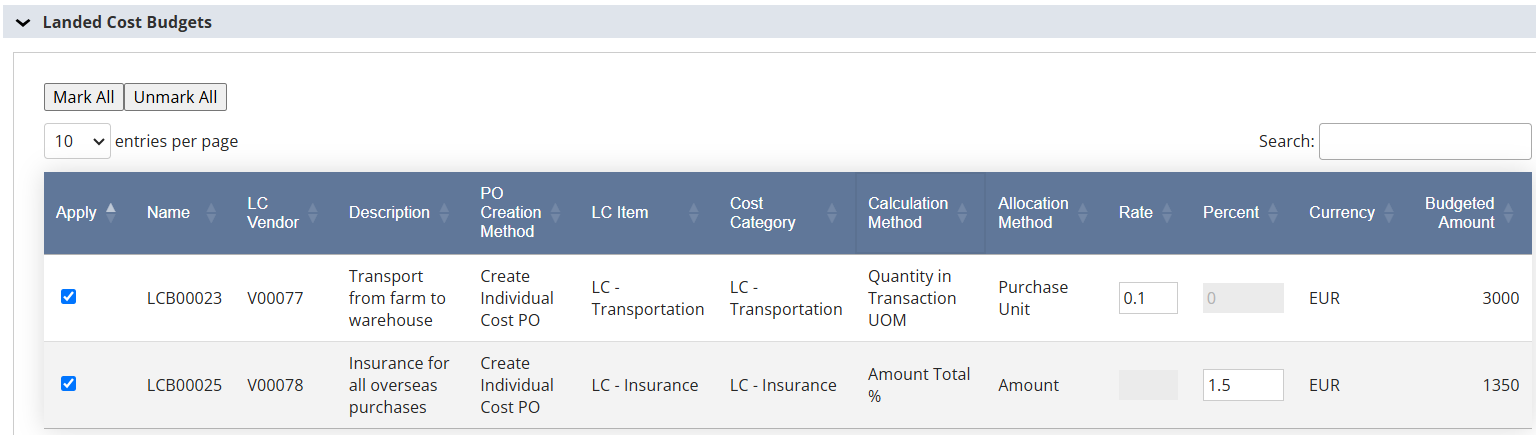
As transaction lines are entered, any applicable Landed Cost Budgets will be displayed on the Landed Cost Budget field group.
Example of Landed Costs being calculated on transaction entry
This allows for users to see which landed costs are applicable, before the transaction is saved. Changes can be made as follows:
* Landed Costs can be excluded by checking the **Apply** check-box
* Rates / Percentages can be modified
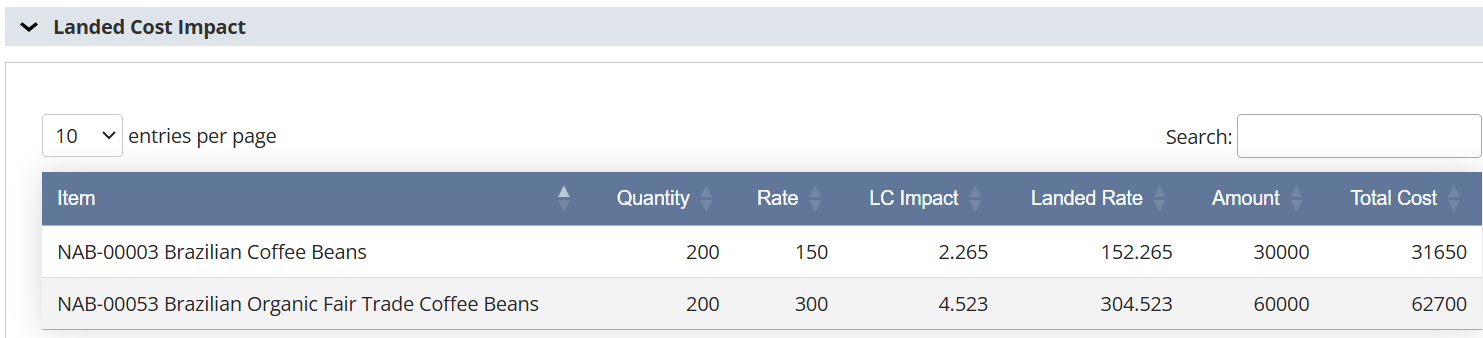
**Landed Cost Impact**
Another field group displays the impact that the Landed Costs have on the rate, as well as the total cost
Example of Landed Cost Impact Table
* **Item, Quantity, Rate, Amount** are all sourced from the transaction
* **LC Impact** is calculated as the Total Landed Cost / Quantity
* **Landed Rate** is calculated as the Rate + LC Impact
* **Total Cost** is calculated as the Amount + Landed Cost
### TQ Transaction Landed Cost
When the transaction is saved, the application will create the **TQ Transaction Landed Cost** records (if applicable). This record represents the application of the cost from the budget record. **TQ Transaction Landed Costs** can also be added manually to transactions, or existing records can be modified
### TQ Transaction Landed Cost Allocation
The application will also create a **TQ Transaction Landed Cost Allocation** record as a child to the **TQ Transaction Landed Cost** record. The record documents the allocation of each Transaction Landed Cost to individual line items within a transaction. It provides granular details on how landed costs are apportioned across items, ensuring precise cost tracking and financial accuracy in inventory valuation.
{% hint style="danger" %}
The Landed Cost Allocation records cannot be modified by users
{% endhint %}
### Receiving a Purchase Order
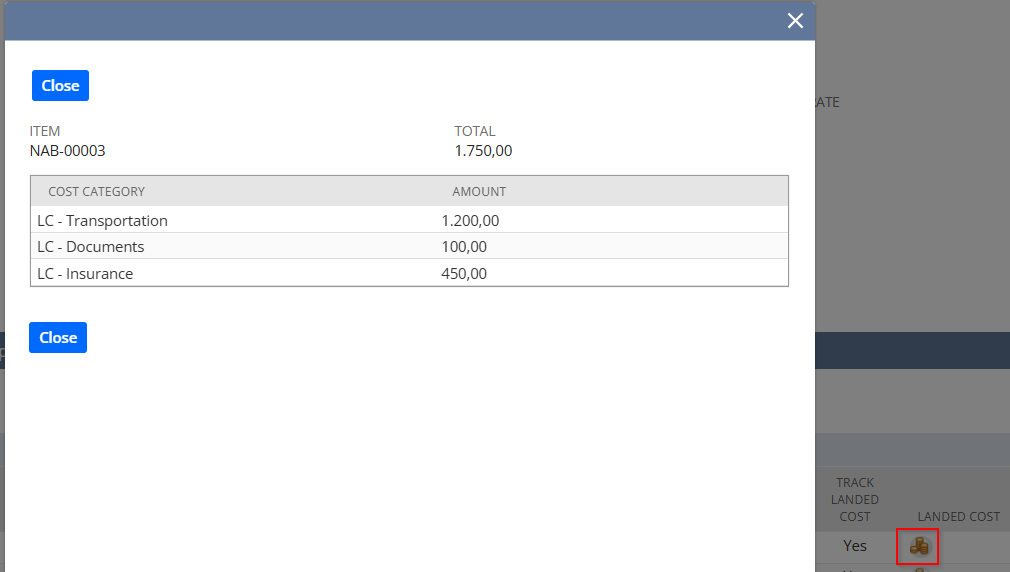
When an Item Receipt is created from a Purchase Order, the application will automatically apply the Landed Cost to the Item Receipt at line-level. It uses information from the **TQ Transaction Landed Cost Allocation** record to determine the amount for each applicable Landed Cost category.
This information is also summarized on the TradeQloud tab.
***
## Need Assistance?
{% hint style="success" %}
If you continue to experience issues after following this guide, we recommend reaching out for further assistance.
Please contact us at with a detailed description of the problem. Our dedicated support team is committed to helping you resolve any challenges you may encounter.
{% endhint %}